ServicesWindow Installation
Window Installation in Whittier
We install windows where none existed before: room additions, ADUs, remodels and enlarged openings. Each unit goes in with a proper header, sill pan and layered flashing, and we sweep, vacuum and haul debris before we leave each day.
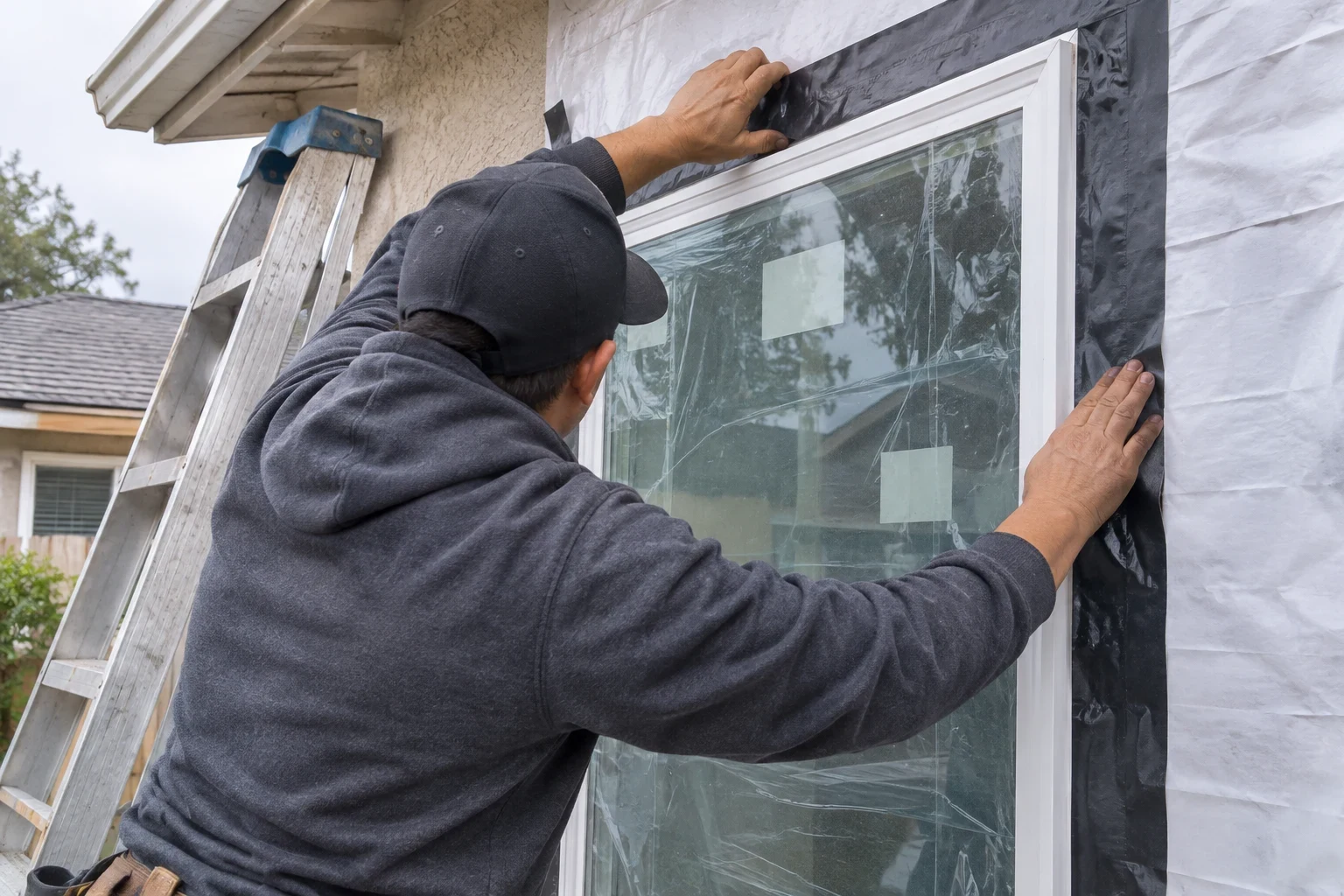
New Openings Need More Than a New Window
Window installation is different from window replacement. Replacement swaps a unit into an opening that already works. Installation means framing the rough opening, sizing the header so the wall above still carries its load, and tying the window into the weather barrier so water sheds outward instead of into the stud bay.
Most failures we see in newer additions trace back to that last step. A nailing fin set without a sloped sill pan, or flashing tape lapped the wrong way, lets wind-driven rain track behind the stucco. It can take a few winters before the drywall stains, and by then the bottom plate may be soft.
Cutting into an exterior wall makes dust and stucco debris. We hang plastic sheeting inside, cover floors and furniture, and lay tarps over planters and walkways outside, so the mess stays where the work is.
What a New Window Installation Includes
- Layout and opening prep
- We confirm the rough opening size, check that it is square and plumb, and verify the header for any new or widened opening. Shimming a window into a racked opening causes sashes that bind and locks that never line up.
- Sill pan and flashing
- A sloped sill pan goes in first, then the window, then flashing tape lapped shingle-style: sides over the fin, head flashing over the sides. Water that gets behind the siding drains out at the bottom instead of sitting on the framing.
- Insulation and sealing
- We fill the gap between frame and studs with low-expansion foam that will not bow the jambs. The interior gets a continuous air seal, and the exterior gets a sealant joint sized to move with the wall.
- Exterior patch and trim
- On stucco walls we rebuild the cut edge with lath and new coats so the opening is closed tight around the frame. Trim and interior returns are finished so the window looks like it was always there.
- Daily cleanup
- Every evening we bag stucco chips, magnet-sweep for loose nails and screws, and vacuum the interior work zone. Your rooms stay usable overnight, not stacked with debris.
When New Window Installation Is the Right Call
You are adding a room or ADU
New living space needs light, ventilation and, in bedrooms, an egress window sized to code. We set those openings to match the plans.
A room feels dark or stuffy
An interior wall with no window, or one small unit on a long wall, can often take a new opening. We check what is in the wall first, including wiring, plumbing and framing, before recommending a size.
You want a bigger opening
Widening a window means a longer header and new framing, not just a larger unit. That is installation work, and we handle it from the framing out.
A remodel is opening the walls anyway
When a kitchen or bath is down to studs, it is the easiest time to add or move a window. The drywall is already off, so the added disruption is small.
How the Work Runs, Start to Finish
- 1
In-home estimate
We look at the wall, measure, and talk through window type, glass and frame material. You get a written quote with each line spelled out, and no sales pressure or obligation.
- 2
Permit and ordering
New or enlarged openings in an exterior wall usually need a building permit, and we pull it. Windows are ordered to the exact opening size once the plan is set.
- 3
Protect, cut and frame
Day one starts with drop cloths, plastic dust walls and covered landscaping. Then we cut the opening, set the header and frame the rough opening.
- 4
Set, flash and seal
The window goes in over the sill pan, gets shimmed level and plumb, and is flashed, foamed and sealed. We test the sashes and locks before trim goes on.
- 5
Finish and walk-through
We patch the exterior, finish the interior, and do a full cleanup. Then we walk the job with you and show you how the new window operates.
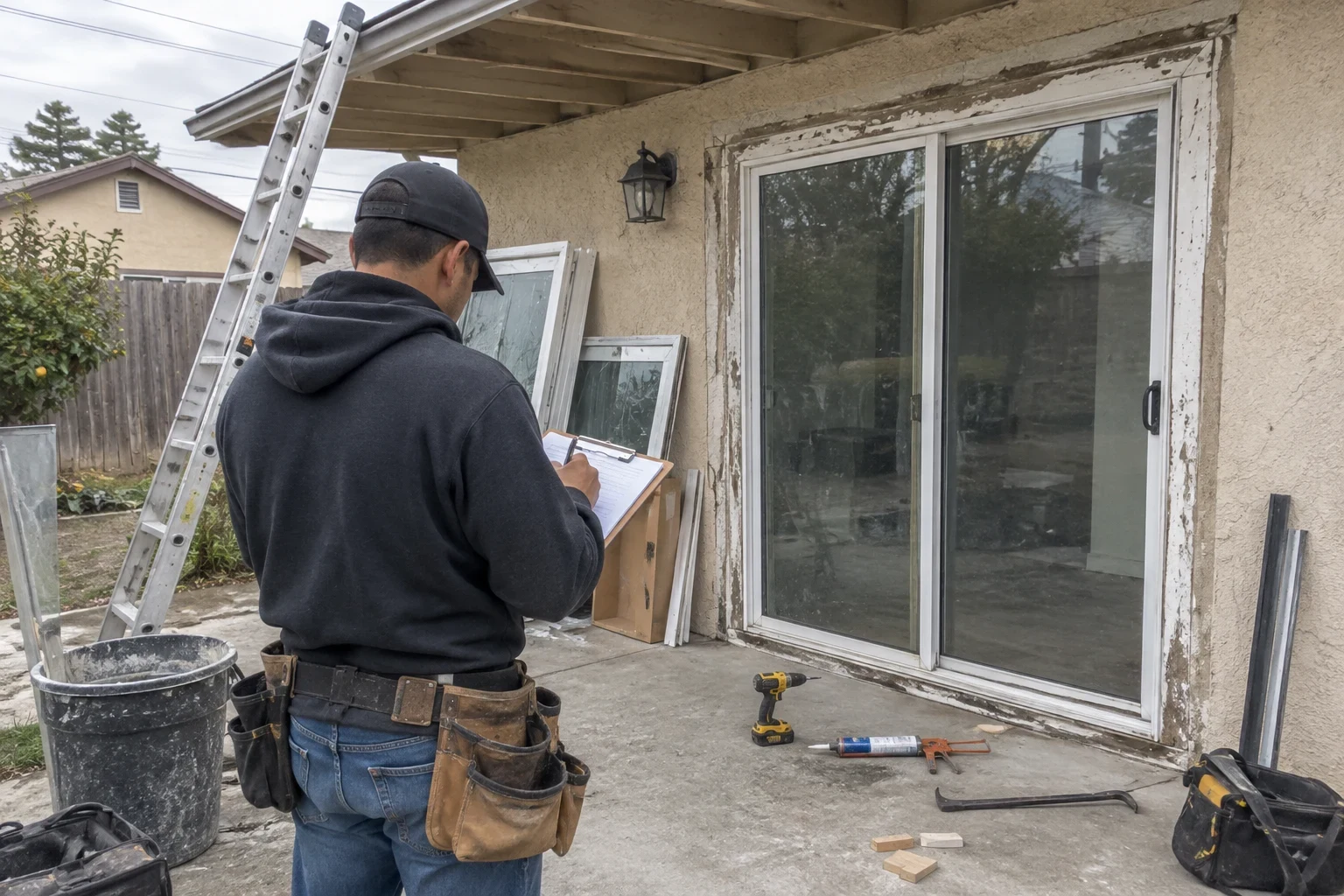
What Moves the Cost of a New Window
A new opening costs more than a swap because the wall itself is part of the job. The window is one line on the quote; framing, flashing and finishing are the others. We price each of those separately in writing, so you can see where the money goes before any cutting starts.
- Wall construction
- Stucco over wood framing takes more patching than siding. Block or brick walls need different cutting and framing methods altogether.
- Opening size and header
- Wider openings need longer, deeper headers, and a load-bearing wall may need temporary shoring while we work.
- Window type and glass
- Vinyl, fiberglass and aluminum frames differ in price, as do low-E coatings and tempered glass where code requires it near doors, tubs or floors.
- What is inside the wall
- Rerouting an outlet, a duct or a pipe adds time. We check before cutting so this shows up on the quote, not as a surprise.
- Permit and inspection
- Permit fees and inspection visits are part of new opening work, and we list them separately.
Window Installation Questions
Something not covered here? (562) 554-5955
What is the difference between window installation and window replacement?
Installation puts a window where there was no opening, or where the opening is changing size. Replacement fits a new unit into an existing opening. If your current openings are fine and you just want better windows, see our Window Replacement or Window Retrofitting pages.
Do I need a permit to add a window?
In most cases, yes. Cutting a new opening in an exterior wall changes the framing, so the city wants to inspect it. We pull the permit and schedule the inspection as part of the job.
How much dust will there be inside?
Cutting stucco and drywall does make fine dust, so we seal the work area with plastic sheeting and keep it under negative airflow where possible. Floors are covered, and we vacuum and wipe down at the end of each day. Rooms outside the work zone should stay clean.
Will the new window meet California energy rules?
Yes. New windows have to meet the state energy code for heat gain and loss, which usually means dual-pane low-E glass. Our Energy Efficient Windows page covers the glass options in more detail.
How long does one new opening take?
A single window in a wood-framed stucco wall usually takes a day or two of on-site work, plus time for stucco coats to cure. Larger openings or load-bearing walls take longer, and we give you the schedule up front.
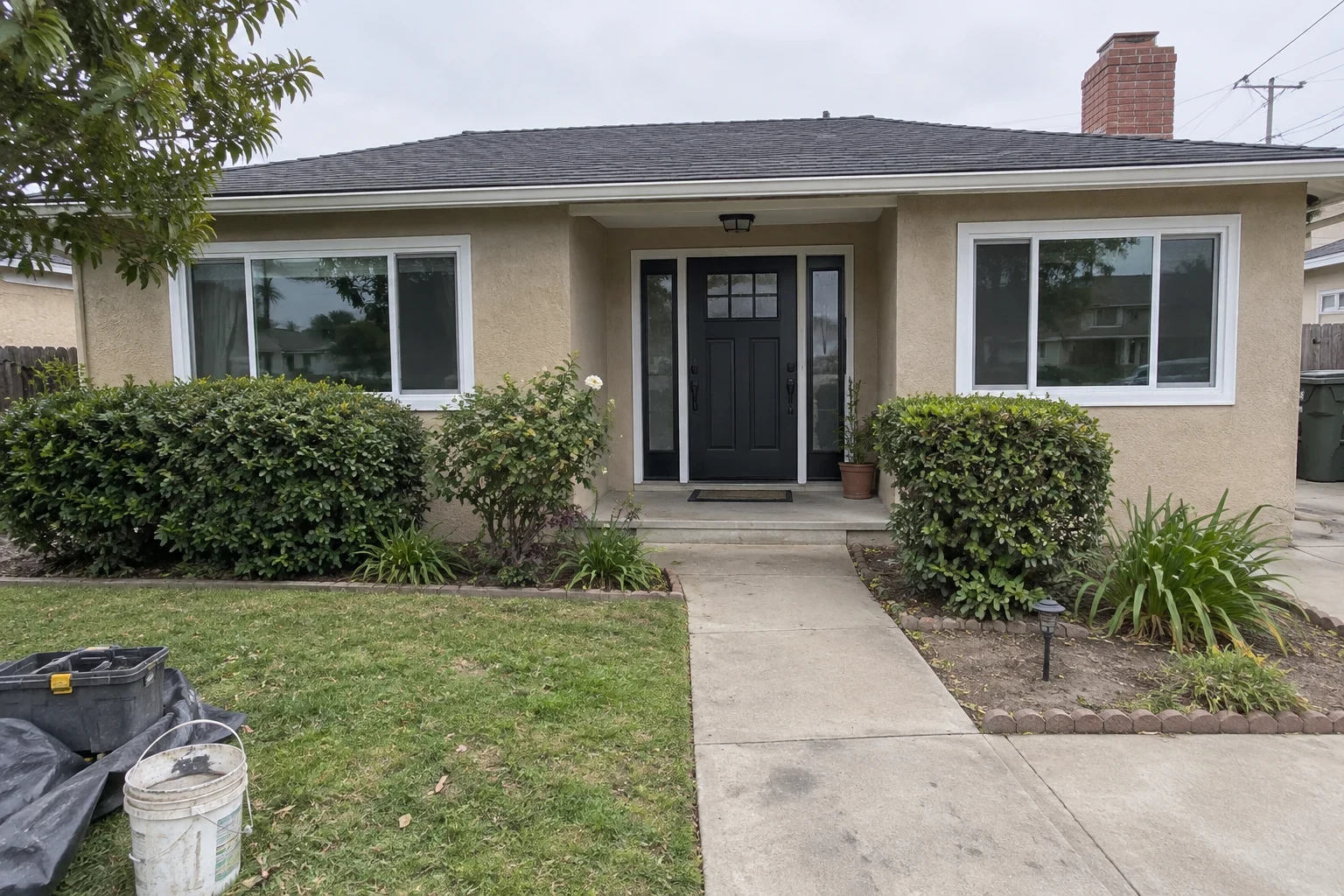
Planning an Addition or a New Opening?
We will look at the wall, explain what the framing and flashing involve, and give you a written quote. The estimate is free and comes with no obligation.