ServicesEnergy Efficient Windows
Energy Efficient Windows in Whittier
We replace drafty single-pane and early dual-pane windows with insulated units built around low-E coated glass, gas fill and warm-edge spacers. You get cooler rooms in summer, fewer drafts in winter and a house left as clean as we found it.
What Makes a Window Energy Efficient
Most heat moves through a window in three ways: sunlight passing through the glass, heat conducting through the frame and spacer, and air leaking around the sash. An efficient window deals with all three. A microscopically thin low-E coating reflects infrared heat while letting visible light through. Argon between the panes slows conduction. A warm-edge spacer and a multi-chamber vinyl frame keep the edges from acting like a cold or hot bridge.
Every unit we install carries an NFRC label showing two numbers that matter: U-factor, which measures how well the window insulates, and solar heat gain coefficient, which measures how much of the sun's heat gets inside. Lower is better for both in a hot, sunny climate like ours, and replacement windows in California must meet Title 24 energy standards. We walk you through the label so you know exactly what you are buying.
What the Work Includes
- Glass matched to each elevation
- West- and south-facing walls take the hardest afternoon sun, so we may recommend a lower solar heat gain glass package there than on a shaded north wall. You pay for performance where it actually helps.
- Full removal of the old unit
- We take out the old sash and, where needed, the old frame, then check the opening for dry rot, rusted fasteners or failed flashing before anything new goes in.
- Air sealing around the frame
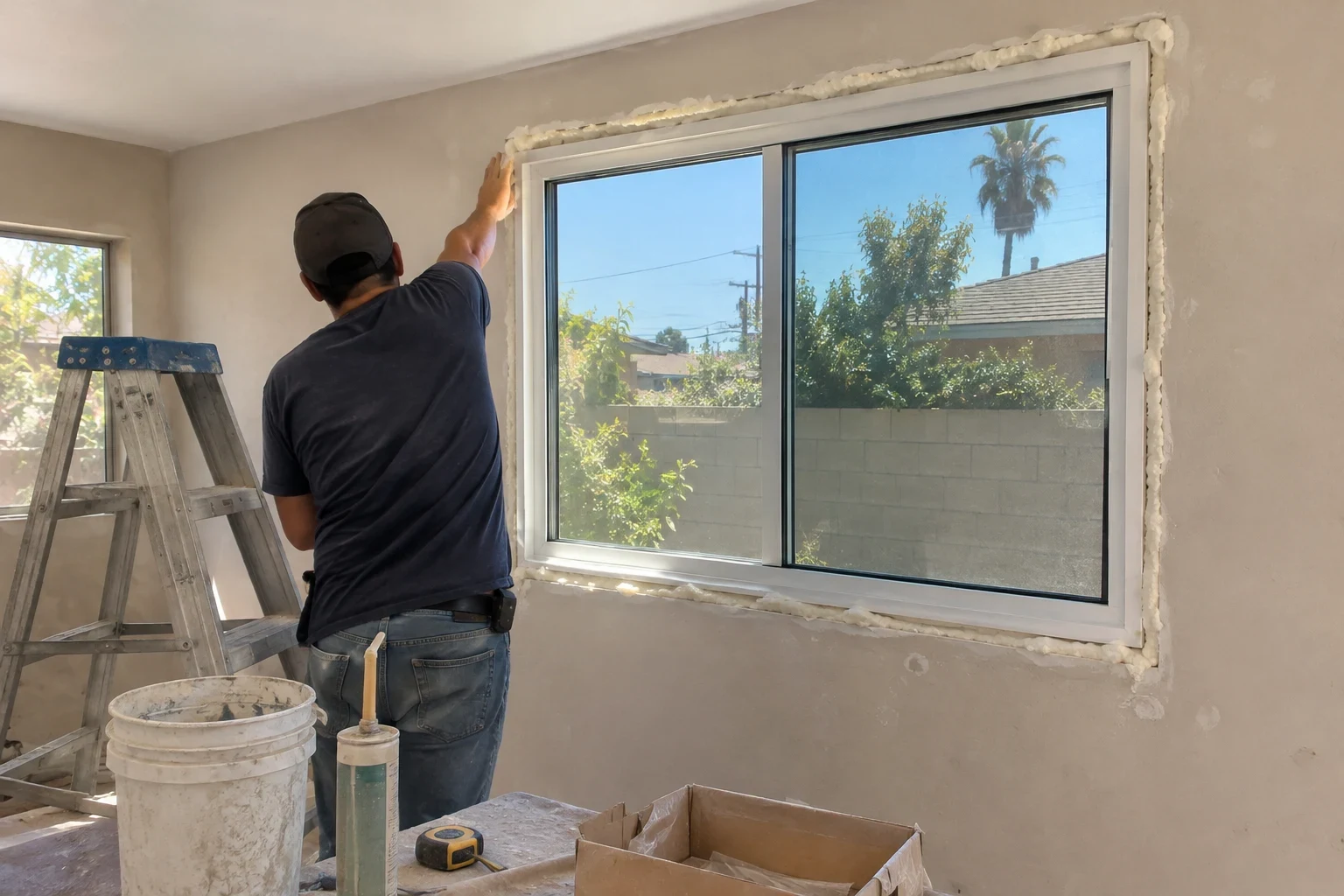
- A high-efficiency window still leaks if the gap between frame and wall is open. We fill that gap with low-expansion foam and seal the exterior with a flexible sealant so air and dust stay out.
- Protection inside and out
- Drop cloths go down on floors, furniture near the openings gets covered and plantings under the windows are shielded. Broken glass and old frames are bagged and hauled off the same day.
- Final check and walkthrough
- We test every sash for smooth travel and a tight lock, then show you how the vents and tilt latches work before we leave.
Signs Your Windows Are Costing You Energy
Rooms that bake in the afternoon
If one side of the house turns hot by mid-afternoon, plain clear glass is letting solar heat straight in. Low-E glass blocks much of it.
Fog between the panes
Moisture showing up inside a dual-pane unit tells you the seal at the glass edge has broken down, and the gas that insulated the gap has leaked out. At that point the window insulates about as well as a single sheet of glass.
Glass that feels hot or cold to the touch
On a hot day, warm interior glass is radiating heat into the room. On a winter morning, cold glass pulls heat out of it.
Single-pane aluminum frames
Aluminum conducts heat quickly and often sweats on cool mornings. Many older homes in the area still have these original frames.
Drafts and dust on the sills
Worn weatherstripping and loose sashes let air through. Fine dust collecting along the sill is a good sign the seal is gone.
What Moves the Price
We price energy efficient windows opening by opening, then adjust for the glass and frame you pick. Every line on your quote gets explained, so you know what each part of the cost pays for. Window replacement runs $495 per window with free installation (minimum purchase of 4 windows per order; some glass size and product restrictions apply).
Glass package
Most of the units we install pair two panes with a low-E coating and an argon fill. Moving up to three panes, or to a coating built for heavy afternoon sun, raises the price.
Size and style
Large picture windows, sliders and custom shapes take more glass and more labor than a standard single-hung unit.
Installation method
A retrofit install inside the existing frame costs less than a full-frame tear-out. If the old frame is sound, our window retrofitting page explains that option.
Condition of the opening
Rotted wood framing or damaged stucco around the opening has to be repaired before the new unit can seal properly.
Access
Second-story windows or openings behind dense landscaping need extra setup time and equipment.
How an Installation Day Runs
- 1
Measure and specify
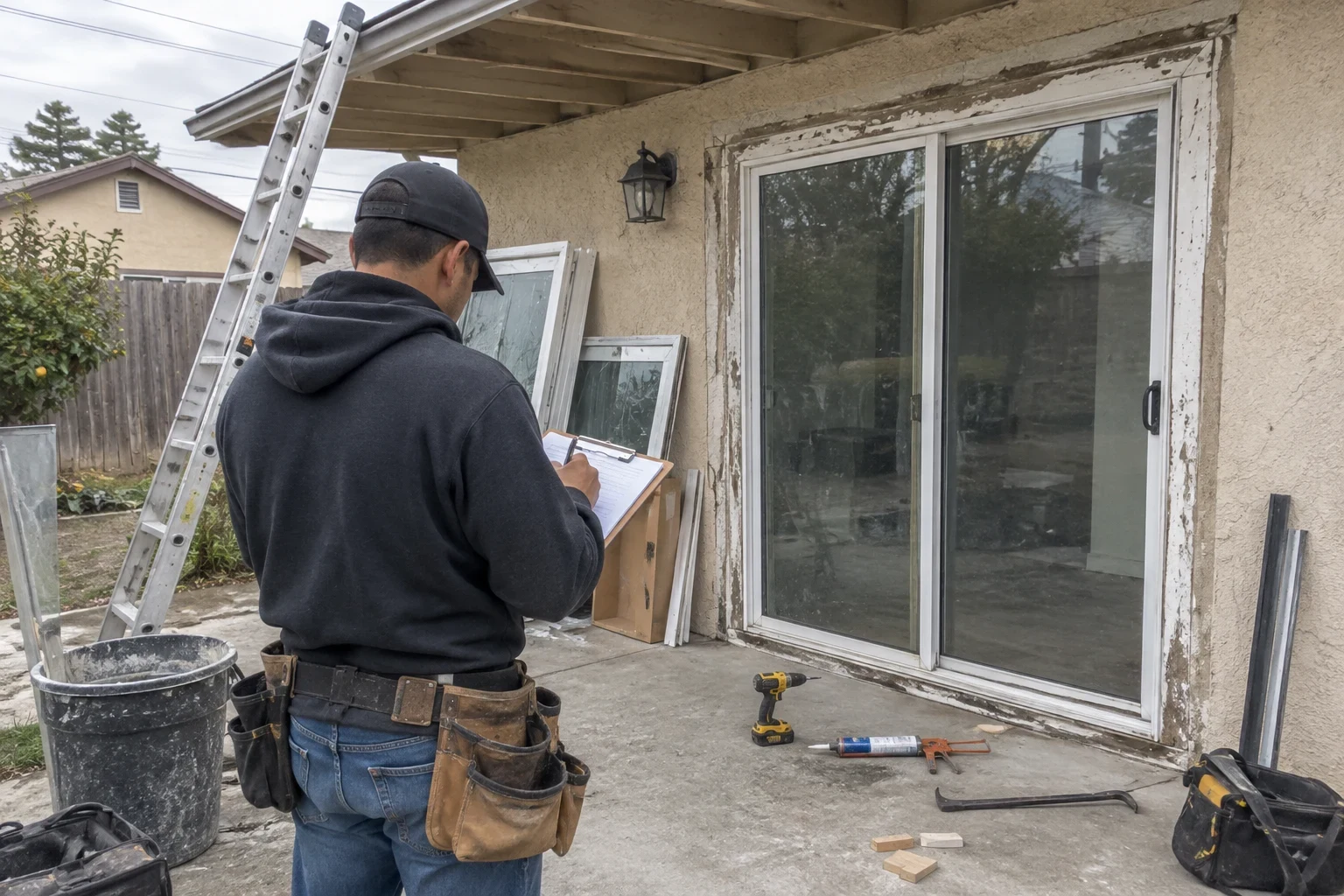
At the free in-home estimate we measure every opening, note sun exposure on each wall and recommend a glass package. You get a clear quote by phone or in person, with no pressure to decide that day.
- 2
Set up and protect
On install day we lay drop cloths along each work path, cover nearby furniture and protect landscaping outside before removing a single window.
- 3
Remove, inspect, install
We take out only one or two windows before the replacements go in, which keeps open holes in your walls to a minimum. The new frame is shimmed until it sits level and plumb, then fastened and sealed.
- 4
Clean up as we go
Debris is picked up at each opening before we move on, and at the end of the day we vacuum sills and floors and wipe down the new glass.
Energy Efficient Window Questions
Will new windows actually lower my electric bill?
Usually, yes, especially if you are moving from single-pane or failed dual-pane glass. The biggest savings come from cutting solar heat gain, so your air conditioner cycles less in summer. How much depends on the number of windows, their orientation and your insulation.
Do low-E windows make rooms darker?
Modern low-E coatings let most visible light through while reflecting infrared heat. Some high-performance coatings have a faint tint. We can show you samples at the estimate so you see the difference before choosing.
Is argon gas worth it?
Argon is denser than air, so it slows heat moving between the panes. It adds little to the cost and is standard in most efficient dual-pane units we install.
How messy is the installation?
Less than most people expect. We cover floors and furniture, remove old units carefully, and clean each opening before moving on. By the end of the day, sills are vacuumed and the debris is gone.
Should I replace all my windows at once?
Not necessarily. If budget is tight, start with the windows on the sunniest walls, where efficient glass makes the most difference. We can plan the rest in phases.
Find Out Which Glass Fits Your Home
We'll measure your openings, check sun exposure on each wall and explain the options in plain terms. There is no obligation and no sales pressure.